
In May, Arthur Mensch entered a mostly vacant hearing chamber to issue a critical alert to the French National Assembly. Over the course of ninety minutes, the leader of the Paris-headquartered artificial intelligence firm Mistral presented his arguments to a limited and dispersed group of legislato
In May, Arthur Mensch entered a mostly vacant hearing chamber to issue a critical alert to the French National Assembly. Over the course of ninety minutes, the leader of the Paris-headquartered artificial intelligence firm Mistral presented his arguments to a limited and dispersed group of legislators. He emphasized that Europe possessed approximately two years to develop its independent AI systems or else face the danger of turning into a subordinate entity reliant forever on technology originating from the United States. France must prevent external AI systems from becoming integrated into its military operations, as such reliance would create lasting and irreversible vulnerabilities.
Merely a month afterward, an abrupt policy shift in the American capital illustrated Mensch's concerns vividly. During June, the United States Department of Commerce briefly restricted overseas entry to Mythos, an advanced artificial intelligence system created by Anthropic, a competitor headquartered in San Francisco. Businesses and administrations across Europe had been actively seeking access to this Anthropic creation due to its superior abilities in cybersecurity domains. Evaluations demonstrated that the system could identify software weaknesses and then exploit them without human intervention, executing complete attack sequences from beginning to end.
Such functionalities also empower protectors to detect issues and develop fixes ahead of opponents gaining entry to AI technology as sophisticated as Mythos. Considering the implications for national security, the idea that foreign administrations might arbitrarily revoke access to essential models began to appear as an intolerable hazard. Abruptly, Mistral, positioned as the leading contender among Europe's limited number of advanced AI developers, emerged as the continent's most feasible substitute option.
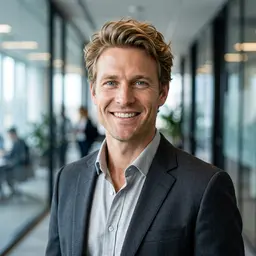
"This situation has confirmed the validity of the cautions we have been issuing to our clients," notes Mensch, a 34-year-old individual of considerable height possessing mildly tousled brown hair who wore a basic white shirt during his video appearance. "Ensure that you genuinely control the technology so that you remain certain it will not be deactivated unexpectedly." The primary inquiry remains whether Mistral possesses the readiness to assume the position of Europe's premier AI leader that numerous stakeholders urgently desire it to claim.
Even with its emphasis on independent AI development, Mistral continues to rely partially on American resources for processing chips and remote computing facilities. The firm recently disclosed an enlarged collaborative agreement with Microsoft. Perhaps of greater significance, Mistral's AI creations currently fall short of matching the most advanced American systems from Anthropic, OpenAI, or Google DeepMind, nor do they surpass certain offerings from Chinese AI entities.
Additional uncertainties persist regarding whether Mistral seeks to be viewed solely as Europe's AI protector. Although raising concerns about the continent's requirement for autonomous AI capabilities, Mensch avoids limiting Mistral to a purely regional role and instead presents the organization as an international AI participant. Roughly forty percent of Mistral's income derives from American and other non-European sources.
Doubts concerning Mistral's capacity to rival on the worldwide platform have followed the company across multiple years. Presently, evolving political landscapes and modifications in how large organizations approach acquiring AI systems may have supplied Mistral with an ideal moment to demonstrate the inaccuracy of its critics.
Founder's Background and Company Origins
Mensch was raised close to Paris as the child of an educator and a computer specialist. From his youth, it became evident that he had acquired his parent's talent for mathematics and scientific fields. "It appears the characteristics are inherited," Mensch observes. He proceeded to study at the distinguished French technical institutions École Polytechnique and Télécom Paris prior to being employed by Google DeepMind during his late twenties. Once more in his professional journey, Mensch's moment proved ideal. At age thirty, he departed from his well-compensated position to establish Mistral alongside his former university associate Timothée Lacroix and former Meta employee Guillaume Lample. Mistral was officially created in April 2023, just five months following the introduction of ChatGPT that ignited widespread excitement in artificial intelligence.
During that period, Mistral was addressing what numerous industry observers perceived as a void in Europe's artificial intelligence landscape: the lack of a domestic research facility able to match American leaders in developing extensive language models. The trio of founders articulate their reasons for creating the business in comparable terms: a wish to broaden access and make available the identical proprietary technology they had constructed for American organizations.
Mistral began with encouraging momentum. In 2023, one month after establishment, it secured a seed investment of 105 million euros with supporters including the American venture capital organization Lightspeed Venture Partners and former Google executive Eric Schmidt. Three months subsequently, it launched its initial creation, Mistral 7B, a freely obtainable model that outperformed Meta's Llama 2 13B in evaluation tests despite having approximately half the scale. In December, Mistral leveraged its initial achievements by closing a funding round of 385 million euros that elevated its valuation beyond 2 billion euros.
Up to the present, Mistral has obtained around 4 billion dollars in total financing according to PitchBook information and currently holds a valuation near 23 billion dollars. By comparison, Anthropic, presently the highest-valued AI startup globally, recently reached a valuation of 965 billion dollars, exceeding Mistral's size by more than forty times, while OpenAI stands at 852 billion dollars, approximately thirty-seven times larger.
Recent Developments and Market Positioning
This disparity in funding may partially account for why, toward the end of 2025, Mistral appeared to experience a slowdown. Notably, it failed to introduce a reasoning-oriented model, a variety of AI that methodically addresses problems before responding and represented the year's key distinguishing feature, until June of that year. Even then, the creation lagged behind one originating from China's DeepSeek.
In December, Mistral responded with its Mistral 3 collection of models. These encompass a primary model named Large 3 along with a group of compact Ministral 3 variants efficient enough to operate on a single graphics processing unit. Mistral anticipates that this efficiency will serve as an important distinguishing factor against its larger and more expensive competitors. Nevertheless, on certain evaluations, Large 3 approaches performance levels that OpenAI's systems reached a year and a half earlier. Mistral maintains that the majority of practical business applications do not necessitate cutting-edge functionalities and that pure benchmark results do not fully represent its models, yet on the most demanding assignments the difference from American leading systems persists.
More recently, Mistral has refined its approach to commercial clients by developing specialized models excelling in practical business functions such as handling audio content and extracting text from digitized documents and visuals. This aligns more closely with how artificial intelligence operates within actual organizations, according to chief technology officer Lacroix. Wearing cargo shorts and a dark shirt, he spoke from Mistral's facilities in Paris's fashionable Canal St.-Martin area amid an exceptional heat period. The company's conference spaces, designated after video game figures, were active with staff seeking the cooling systems, an uncommon amenity in Paris.
"Every individual's aspiration involves constructing superior models, yet we adopt a somewhat broader initial strategy rather than narrow focus, which is commonly observed among Chinese organizations," Lacroix explains. Mistral seeks to deliver a solution where business operations function on smaller specialized systems while larger general models activate for assignments requiring deeper analysis or wider abilities. This method can lower artificial intelligence expenses, enabling organizations to forecast and limit their spending instead of observing usage increase uncontrollably. Throughout the previous year, Mistral has increased its count of major business clients to over one hundred.
The timing proves advantageous. Accounts of excessive charges, including one Claude business user accumulating a 500 million dollar expense, have rendered executives cautious about permitting unrestricted staff access to leading AI systems. Simultaneously, the Anthropic situation has hastened movement toward flexible workflows where organizations interchange various models as the central component. Establishing essential processes on a single model appears more hazardous when that model might become unavailable suddenly.
Industry analysts express general positivity regarding Mistral's future yet indicate that matching leading American and Chinese laboratories purely on model performance will prove challenging. "The foremost AI facilities have been gathering these techniques, and even with constant hardware they are doubling or tripling training speeds through algorithmic improvements alone," states Stuart Russell, a computer science professor at UC Berkeley. Although organizations like Mistral can achieve parity, he notes, the true leading advantage resides in rapidly testing new concepts repeatedly, which demands substantial computing resources.
Mistral also seems to be adopting a strategy similar to Palantir by succeeding through intensive collaborative implementation with important clients rather than pursuing widespread adoption as Anthropic and OpenAI have done. London-based recruitment monitor Zeki Data determined that one third of Mistral's 168 available positions involve enterprise market entry, indicating a focus on deeper embedding with technical personnel integrated into client operations.
Most clients already participate in extensive strategic multi-year agreements, according to Marjorie Janiewicz, Mistral's chief revenue officer. She contends that these contracts, which combine efficient models with extended transformation initiatives, provide the company with superior operational economics compared to laboratories pursuing temporary experiments.
Mistral's income expansion indicates this approach may be succeeding. Its yearly revenue pace surpassed 400 million dollars in 2025 and by early 2026 stood positioned to exceed 1 billion dollars in total revenue by year's end. Despite this progress, Mistral's sales remain modest relative to the estimated 47 billion dollars representing Anthropic's current yearly revenue pace.
The organization is further expanding into manufacturing sectors. In May it acquired Emmi AI, an Austrian startup focused on physics-oriented AI for industrial applications previously valued at around 330 million euros. This purchase supports agreements with Airbus and BMW. Internally the founders discuss a significant investment in industrial applications using AI agents and physics-informed models to redesign and simulate physical systems ranging from production lines to turbines and aircraft components.
Mistral's growing areas of focus also encompass defense, a sensitive domain as critics including religious leaders caution that employing AI in combat choices introduces unacceptable dangers and obscures responsibility. "Fundamentally this represents dual-purpose technology since it enables information processing and warfare centers on information handling and correct decision making," Mensch responds to the debate. "We would prefer the world to heed the pope's guidance and achieve complete peace, yet that does not appear to be occurring."
Following Washington's brief interruption of foreign access to Anthropic's Mythos model, international governments have become more open than ever to Mistral's case for AI autonomy. Jordan Bardella, head of France's National Rally and European Parliament member, described the Mythos restriction as confirmation that AI constitutes a significant matter of national independence and advocated for France to accelerate assistance for Mistral. Other European officials expressed concerns about domestic infrastructure and security, with one likening the absence of Mythos to Iran's closure of the Strait of Hormuz.
To strengthen this argument Mistral has invested hundreds of millions in physical facilities. A data center south of Paris and another location in Sweden are currently under development. The company also intends to lease that capacity as a cloud service provider itself. In June 2025 it introduced Mistral Compute, an Nvidia-based European cloud platform, an arrangement French President Emmanuel Macron described as historic when announcing it together with Mensch and Nvidia chief Jensen Huang at the Paris technology conference VivaTech.
"We aimed to broaden our supply sources and avoid obtaining all our computing from a single supplier," Lacroix notes. All the new computing capacity he describes continues to utilize Nvidia equipment, and developing proprietary chips is not currently under consideration. "At present Nvidia represents an excellent choice," he states. "Yet we are exploring additional chip manufacturers familiar with the requirements."
For the moment Mistral occupies the same situation as nearly every AI laboratory outside China, managing its models and data facilities yet still required to lease the foundational hardware from an American corporation. This circumstance may explain why Mistral approaches the concept of sovereignty cautiously, which in its existing interpretation Mensch describes as rooted in a misunderstanding.
"Sovereignty does not involve isolation but rather possessing meaningful influence within the value chain along with the ability to generate cumulative benefits through reinvestment in research and development while advancing technologically," he explains.
One unexpected consequence of the attention is that Mistral has encountered rumors about a large feline over recent weeks. In mid-June a fabricated Mistral model named Le Chaton Fat, French for fat kitten and a humorous allusion to Mistral's previous chatbot Le Chat, started appearing on social platforms complete with a fabricated performance chart asserting superiority over Anthropic's Fable 5.
Although the model itself proved fictional, the online discussions highlighted broader public aspirations that Mistral could deliver a genuine alternative to American laboratories. "It reflects their hopes," Mensch says regarding the invented creation, "and we are working to fulfill those expectations in the near future." Chief science officer Lample adds that Mistral has several new models planned for launch during the summer period.
Nevertheless other Mistral leaders are attempting to moderate such elevated anticipations. "There cannot be validity to the assertion because they are as substantial as the cat," Lacroix remarks. "However we are developing improved large models and feel enthusiastic about our progress."
Over recent years every major AI laboratory's chief executive has needed to function somewhat as a geopolitical figure, called before parliaments, international summits and political discussions far removed from the product planning that typically occupies startup leaders. If Mensch has joined this group he has done so with some reluctance often influenced by President Macron.
In June at the G7 summit in Évian-les-Bains Mensch appeared seated beside then United Kingdom Prime Minister Keir Starmer. Also present were United States President Donald Trump and the leaders of OpenAI Anthropic and Google DeepMind. When questioned whether he engages in politics Mensch responds "I regard myself as a businessperson." Yet he recognizes the power AI wields. "Artificial intelligence truly concerns power your nation's power your organization's power depends on your AI approach so we become involved in discussions involving power and in that sense we engage somewhat in politics."
Mensch possesses a certain French directness uncommon among many technology executives. Beyond the AI sovereignty discussion he has entered other politically sensitive areas. He has advocated for relaxing European Union AI Act compliance levels which he says disproportionately affect smaller entities and nonprofits warned legislators that AI-related employment reductions cannot be ignored highlighted how excessive AI reliance might diminish human skills and perhaps most controversially suggested a revenue charge on AI companies to support Europe's creative sectors. Some have viewed this proposal as enabling AI firms to avoid copyright obligations for minimal cost compared to licensing fees. Mistral itself has faced accusations from French publisher Nouveau Monde Éditions of training its models on unauthorized copies of its publications. Mistral rejects these claims.
"Tension exists between the AI domain and the cultural domain," Mensch observes. "We are suggesting a method to provide revenue to the cultural community because fundamentally training models involves compressing knowledge and they add to global understanding."
Mistral has also encountered political scrutiny from European Union legislators who questioned the company regarding its strategic collaboration with Microsoft in 2024. The agreement prompted an EU competition review over concerns that a foreign technology giant had obtained excessive influence over Europe's domestic AI leader.
In the company's initial period an advisory cofounder Cédric O a former government official in Macron's administration managed much of Mistral's public relations. His position attracted attention after he shifted from backing stricter technology rules to advocating against stronger EU AI Act requirements on Mistral's behalf. French transparency authority HATVP ultimately identified no problem with O's move from public to private roles. O has since withdrawn from his official advisory position according to Mensch. "I meet with Cédric regularly he remains a good friend," he says.
For Mensch much of the concern surrounding AI reduces to one central issue who gains the advantages. He views the increasing opposition to AI less as an ethical overreaction than as a signal about power concentration. If only a few American giants secure the benefits he argues resentment and instability will result. "You want individuals to prosper through artificial intelligence," he states. "One contribution we seek to make involves spreading the technology so it becomes more equitable."
That objective is likely to resonate with European policymakers now attempting to navigate an independent course through the AI expansion. Mensch for his part does not appear particularly unsettled by the geopolitical responsibility suddenly placed upon him. When asked about the turbulent period following the Mythos restriction he dismisses it as more demanding for clients than for the company itself.
Whether Mensch will fully adopt his position as a European leader or successfully pursue his American competitors to AI's forefront remains uncertain. Yet Mistral which derives its name from a powerful wind originating in southern France certainly benefits from favorable conditions.
Read this withClaudePerplexityGrok